

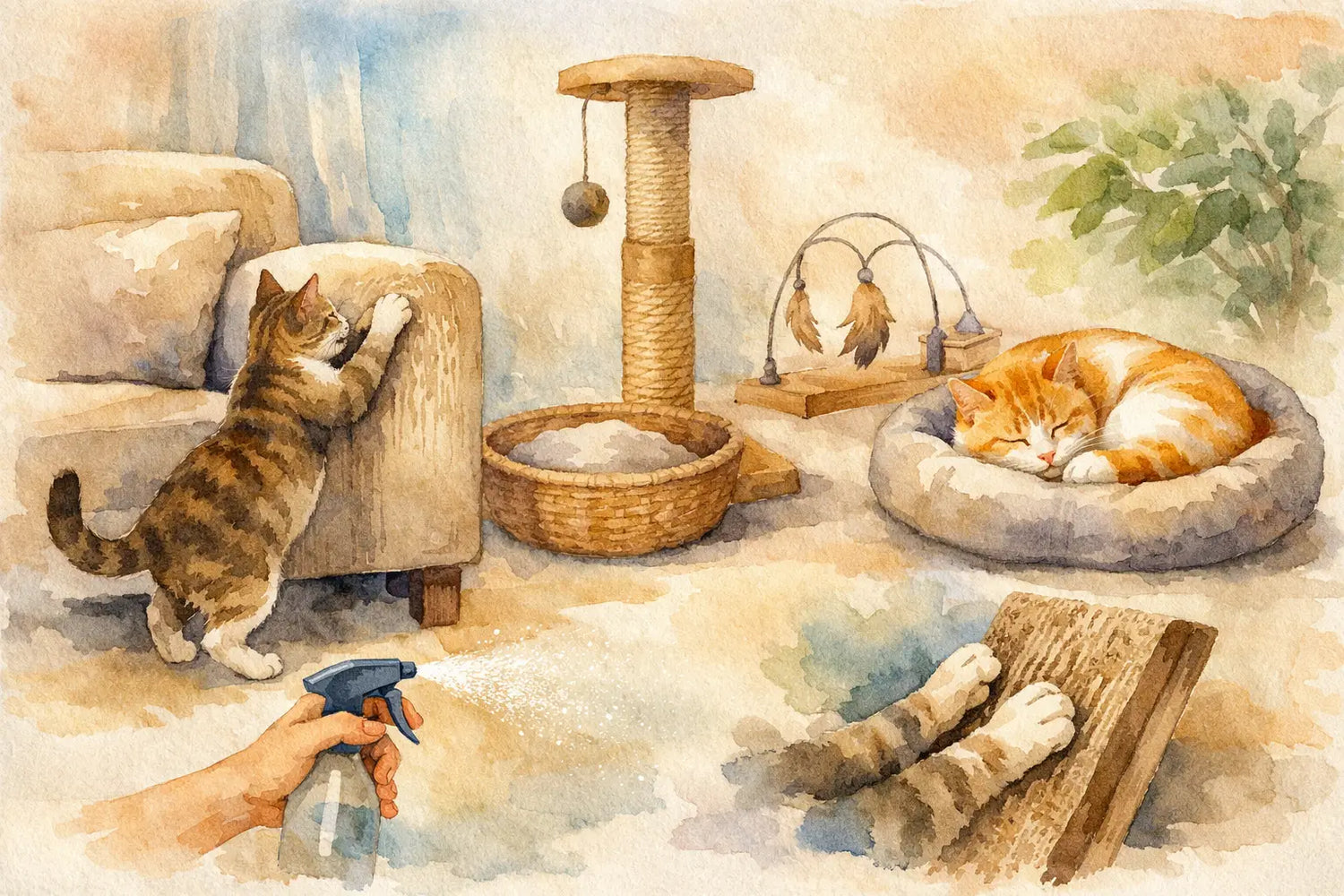
A new couch, a beloved armchair, or that one corner of the rug: cats surprisingly often choose exactly the piece of furniture you want to keep looking nice. If you're wondering how to stop cats from scratching furniture, you don't have to unteach scratching. It's natural, healthy cat behavior. The trick is to give your cat a more attractive, better placed, and nicer alternative.
That requires a little more than just putting a small scratching post in a forgotten corner. Cats scratch to groom their nails, stretch their bodies, leave scent marks, and feel safe in their territory. A solution that works aligns with all those needs, as well as with your interior.
Why does your cat scratch the furniture?
Scratching is not a sign that your cat is naughty or has personally chosen your interior as a target. The armrest of the sofa is often simply ideal: sturdy, high enough to stretch out, and precisely in a place where the family spends a lot of time. Moreover, fabric pleasantly clings to their claws.
The location is at least as important as the scratching furniture itself. Cats often mark near doorways, next to their sleeping spot, in the living room, or by a window where they can survey their territory. If your cat repeatedly scratches the same leg of the couch, that spot tells you something. There, you not only want to prevent damage but also offer an alternative.
Also pay attention to the shape. Some cats want to scratch upright against a vertical post or wall surface. Others prefer a sturdy horizontal scratching board, a low scratching plank, or a slanted element. A cat that uses the armrest of the couch will usually not benefit much from a short, wobbly post on the floor.
How do you stop cats from scratching furniture without a fight?
The most effective approach is positive and practical: make the desired spot irresistible and the old scratching spot temporarily less attractive. Yelling, a spray bottle, or chasing your cat away can cause stress. Some cats will then scratch precisely when no one is looking, or they will pick out a new piece of furniture.
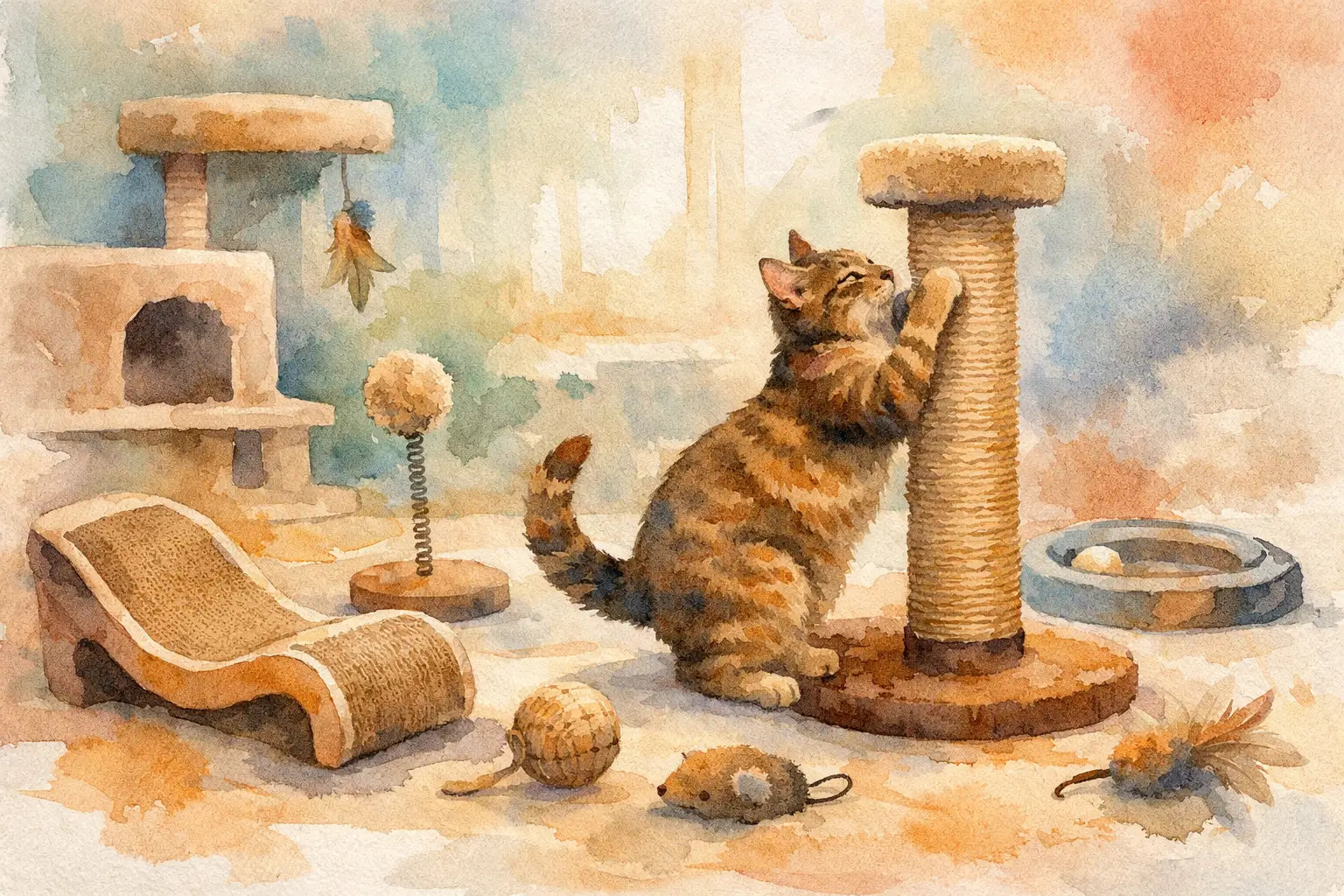
Start with a scratching solution that truly fits your cat's habits. Choose a stable scratching post that doesn't wobble when your cat stretches. For adult cats, height is important: they must be able to stretch their front paws without crouching. A scratching piece of furniture with a wide, heavy base instills confidence, especially for enthusiastic scratchers or larger cats.
Then, don't place that scratching post where it's least in the way, but where it has the best chance of being used. First, put it right next to the furniture your cat is currently scratching. That might not feel like the most elegant setup, but it's temporary. As soon as your cat consistently uses the new spot, you can move the furniture step by step if necessary.
Reward every desired moment. Use a quiet compliment, a favorite treat, or a short play session when your cat uses the scratching post. You don't need to set up an elaborate training program. Repetition makes the difference: scratching in the right place should feel pleasant, familiar, and rewarding.
Make the old scratching spot less interesting
While the new scratching spot becomes more attractive, you can temporarily protect the damaged furniture. A washable throw, a furniture protector, or double-sided tape on the favorite scratching zone can help. Many cats find a sticky surface unpleasant for their paws. Always test materials first in an inconspicuous spot to keep your upholstery beautiful.
Preferably do not use strong-smelling sprays or essential oils. Scents that are fresh or soothing for humans can actually deter cats or even be unsafe. A physical, temporary barrier usually works more clearly and calmly.
If your cat scratches the couch because it also sleeps or rests there, create a complete corner: a scratching piece of furniture, a soft bed, and possibly a toy in the same zone. Scratching, resting, and observing go hand in hand for many cats. By bringing those needs together, the new piece of furniture becomes a true favorite spot instead of a mandatory detour.
Choose a scratching post that matches your interior and cat
A scratching post doesn't have to be a compromise between a happy cat and a beautiful home. Design-oriented cat furniture makes it possible to consciously integrate a scratching spot into your living room, bedroom, or study. Think of soft, natural shapes, calm colors, and playful designs that match the rest of your decor.
For an apartment with one cat, a compact but tall scratching post can suffice, provided it is sturdy and placed in the right location. In a home with multiple cats, a larger climbing and scratching piece of furniture is often smarter. Cats use height to give each other space. Extra platforms, resting spots, and multiple scratching surfaces prevent one spot from becoming a source of frustration.
Material also matters. Sisal is popular because it offers a clear structure where nails can get a grip. Cardboard feels different and can be ideal as a second scratching option, especially for cats that work low to the ground. Fabric scratching surfaces can beautifully complement an interior, but choose a design that is sturdy enough for daily use.
At Salt & Light, design and daily cat happiness are inseparable. A distinctive scratching piece of furniture can even become a charming accent in your home – from a playful cactus shape to a soft, flower-like silhouette – while giving your cat exactly what she needs: grip, height, comfort, and her own spot.
Small habits that prevent major damage
A good scratching post solves a lot, but a few routines make the result more lasting. Trim your cat's nails regularly and carefully, only the sharp transparent tip. This does not prevent scratching behavior but limits the damage if your cat still makes the wrong choice. If you are unsure, a vet or cat groomer can show you how to do this safely.
Additionally, play briefly but actively with your cat every day. Boredom is not always the cause of scratching, but sufficient hunting play, climbing, and attention reduce tension. Indoor cats especially benefit from variety: a spot by the window, a climbing route, a quiet sleeping place, and a few attractive scratching zones spread throughout the house.
Also consider changes. A move, a baby, visitors, a new pet, or even a different layout can cause a cat to mark more. Then give her not less, but more security: place scratching opportunities near important passages and provide quiet, high resting places.
When is extra help advisable?
Does a cat suddenly start scratching much more, does she seem restless, or does she avoid a scratching post she previously liked to use? Then look beyond the furniture. Pain in paws, joints, or nails can make a different posture or surface uncomfortable. Stress can also manifest as changed behavior.
In case of a noticeable behavioral change, contact your vet, especially if your cat also eats less, hides, limps, or reacts differently to touch. A scratching problem is usually easy to solve, but your cat always deserves a solution that also prioritizes her well-being.
Protecting your furniture therefore doesn't start with forbidding, but with better understanding. Give your cat a sturdy, beautiful scratching spot where she needs it, keep your approach calm, and allow it a few weeks. This way, your home remains neat, and your cat gets all the space to do exactly what makes cats so wonderfully unique.

Laat een reactie achter
Alle reacties worden gemodereerd voordat ze worden gepubliceerd.
Deze site wordt beschermd door hCaptcha en het privacybeleid en de servicevoorwaarden van hCaptcha zijn van toepassing.