

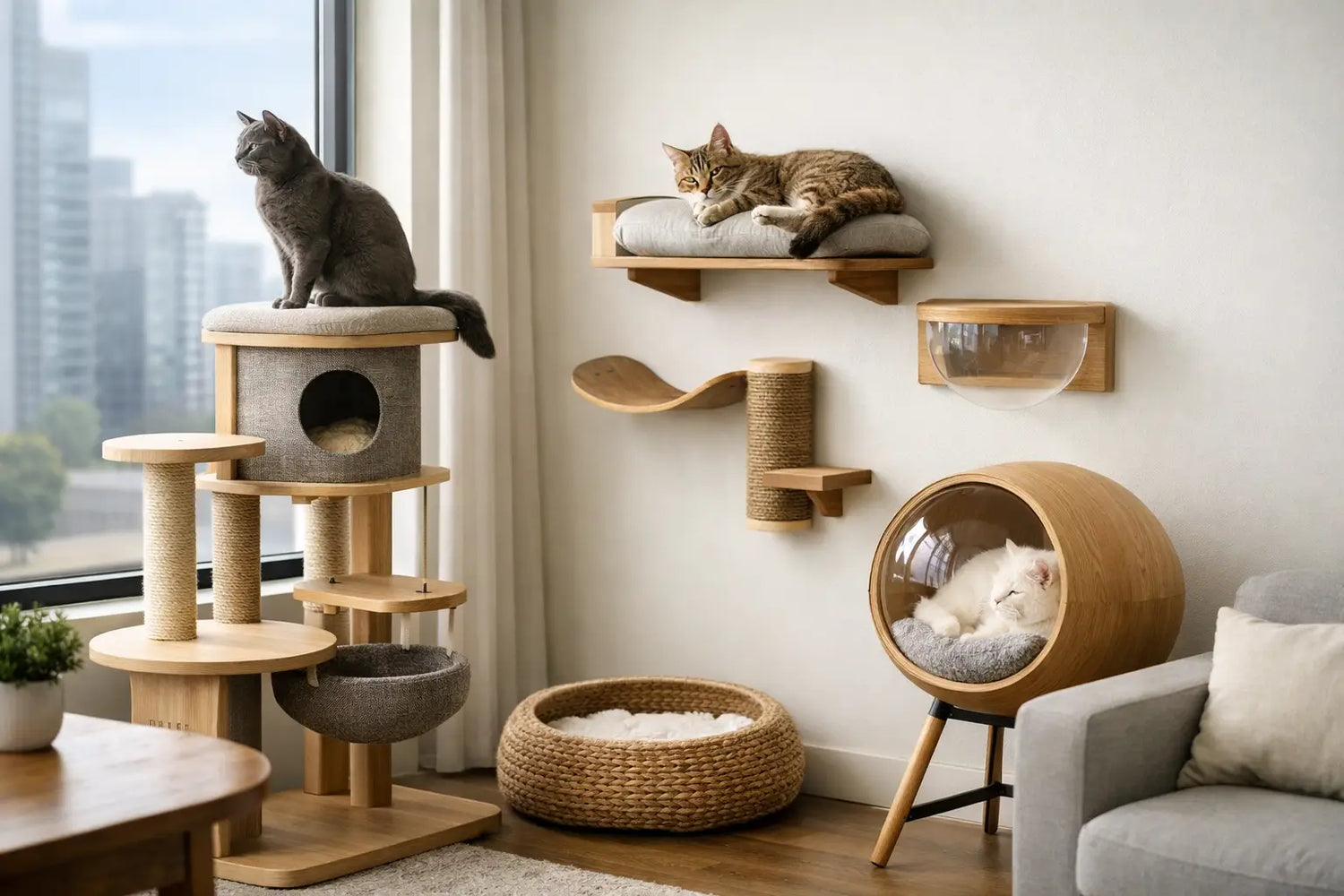
A bulky beige cat tree in the corner can undo an otherwise beautiful room in about five seconds. That is exactly why modern cat furniture for apartments matters so much. In smaller homes, every piece has to earn its place, and cat furniture should support your cat’s instincts without making your living space feel crowded, chaotic, or temporary.
Apartment living changes the brief. Your cat still needs to scratch, climb, perch, hide, and nap, but you may be working with one main living area, limited floor space, and a design style you’ve put real thought into. The best pieces do more than entertain your cat. They blend into the room, use vertical space well, and feel considered rather than apologetic.
What modern cat furniture for apartments should do
Good apartment cat furniture is always solving two needs at once. It should give your cat a clear outlet for natural behavior while also respecting the way you want your home to look and function. That means compact footprints, cleaner silhouettes, and materials that feel at home next to your sofa, dining chairs, or shelving.
There is also a practical side that matters just as much as aesthetics. Small spaces make wear and tear more visible. A scratched-up post, unstable platform, or fabric that traps fur can quickly become a daily irritation when it sits in full view. In an apartment, easy cleaning and durable construction are not nice extras. They are part of the design brief.
Modern pieces also tend to be more intentional about visual weight. Open frames, sculptural shapes, soft neutral palettes, and nature-inspired forms can make cat furniture feel more like decor than pet equipment. That difference is especially noticeable in apartments where one object can influence the whole room.
Start with your cat, not the room
It is tempting to shop by color first, but the smarter approach is to start with your cat’s habits. A young, active climber needs very different furniture than a senior cat who prefers low, stable lounging spots. If your cat spends the day watching the window, a tall perch may be more valuable than a hidden cubby. If scratching the sofa is the main issue, a stylish scratcher placed near that exact trouble spot will outperform a larger piece tucked elsewhere.
This is where apartment planning becomes more precise. You are not trying to create a separate pet zone in a spare room. You are integrating cat behavior into the spaces you already use. One well-positioned climber near natural light can do more than two oversized towers placed where your cat never goes.
Multi-cat homes need another layer of thought. In a compact apartment, vertical territory helps reduce friction. Cats often feel more comfortable when they can choose different heights and resting points, even if the floor plan is small. That does not always mean buying the biggest structure available. It means creating options.
The pieces worth making room for
Not all cat furniture has to be large to be useful. In apartments, a few well-chosen categories usually work better than a long list of mediocre ones.
A compact cat tree or climber is often the anchor piece. Look for one with a stable base, usable scratching surfaces, and platforms your cat can actually reach comfortably. The goal is not maximum height at any cost. It is confident climbing in a footprint that suits the room.
A dedicated scratcher is equally important, especially if your cat has already claimed your rug, chair, or bed frame. Flat scratch pads, angled loungers, and upright scratching posts each appeal to different habits. If you have space for only one, choose the format your cat already prefers. Design matters, but behavior matters more.
Beds and cushions are where softness meets style. In apartments, these tend to work best when they feel portable and visually calm. A bed that can move from bedroom to living room gives you flexibility, and a cushion in a refined fabric or playful sculptural shape can feel intentional instead of like an afterthought.
Ceramic bowls and feeding mats are not furniture in the traditional sense, but in a compact home they absolutely shape the visual experience. Feeding areas are often visible all day, so elevated materials and coordinated design make a real difference. Practical details like easy-to-clean surfaces and stable construction matter here too.
How to make cat furniture look right in a small home
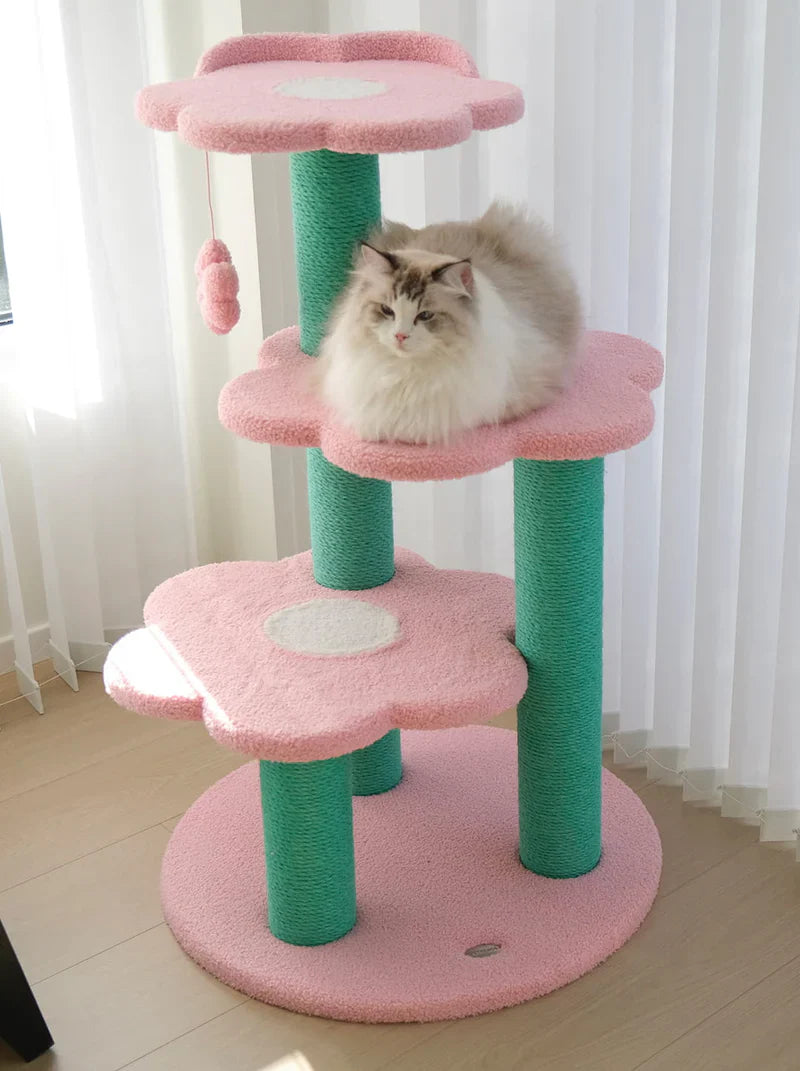
The easiest mistake is treating pet pieces as separate from the rest of your interior. Modern apartment living looks better when cat furniture belongs to the same visual language as the room. If your home leans soft and minimal, choose pieces with clean lines and muted tones. If you prefer playful color and sculptural forms, nature-inspired collections can add personality without feeling messy.
Texture is one of the best tools. Woven scratch surfaces, soft cushions, smooth ceramics, and matte finishes create contrast in a room without adding clutter. Shape matters too. Rounded silhouettes and organic forms usually feel softer in tight spaces than sharp, bulky constructions.
Placement deserves more attention than most people give it. A cat tree beside a window often looks more natural than one dropped in the middle of a wall. A scratcher near a sofa works because it answers a real need, and it can still look polished if the proportions are right. Furniture that aligns with existing zones, like reading corners, sun patches, or shelving walls, tends to feel integrated.
There is always a trade-off between visibility and restraint. Some pet owners want cat furniture to disappear into the room. Others are happy for it to be a statement piece. Both approaches can work. The key is choosing intentionally rather than settling for whatever feels least offensive.
Small-space features that are actually worth paying for
Premium design should never mean fragile design. In apartments, the best cat furniture earns its price through longevity, stability, and better day-to-day living.
A sturdy structure matters more in small homes because wobbly furniture feels disruptive fast. If a climber shakes when your cat jumps, it will not inspire confidence for your pet or for you. Durable scratching materials are worth prioritizing too, especially if the piece sits in your main living space and gets constant use.
Removable cushions and wipeable finishes are also valuable. Fur, dust, and everyday mess are easier to manage when cleaning does not require a full production. That matters even more in open-plan apartments, where dining, relaxing, and pet living often happen in the same visual field.
Thoughtful proportions are another premium feature, even if they are less obvious on a product page. Oversized platforms, awkward ladders, or heavy bases can waste precious space. Better design tends to feel more edited. It supports movement without dominating the room.
For design-led shoppers, coordinated collections can be especially appealing. Instead of mixing random pet accessories over time, you can create a more cohesive look across sleeping, feeding, and play. That is one reason curated ranges feel so satisfying in apartments. The whole home looks calmer.
When style and function clash
Sometimes the most beautiful piece is not the right piece for your cat. That is the honest part of shopping this category. A sleek lounger is lovely, but if your cat only wants tall vantage points, it may become an expensive sculpture. Likewise, an elaborate climber with every feature imaginable can overwhelm a smaller room and still go underused.
The answer is usually balance. Choose one hero piece that supports your cat’s strongest instinct, then add smaller complementary items. If your cat is a climber, make the tree the star and keep beds and bowls visually quiet. If your cat loves to curl up and scratch, invest in a beautiful scratch lounger and a refined bed, then keep vertical pieces more compact.
This is where a design-conscious retailer can genuinely help. Curated selections remove some of the guesswork by focusing on products that are already solving for both form and function. Salt & Light, for example, speaks to pet owners who want those two things to coexist without compromise.
A better apartment setup feels better for both of you
Cats do not need endless square footage to live well. They need security, stimulation, comfort, and a home that makes sense to them. You need pieces that respect your space, your routines, and the way you want your home to feel when you walk through the door.
Modern cat furniture works best when it supports that shared life quietly and beautifully. The right perch catches the morning light. The right scratcher saves the sofa. The right bed becomes part of the room instead of something you hide before guests arrive. When pets are family, their essentials should feel just as considered as everything else you bring home.

Laisser un commentaire
Tous les commentaires sont modérés avant d'être publiés.
Ce site est protégé par hCaptcha, et la Politique de confidentialité et les Conditions de service de hCaptcha s’appliquent.